MORE THAN A CHURCHYARD
Three days of hard work reveal a wealth of wildlife and natural history
40 volunteer hours3 days of worka surprising amount of wildlife
There’s something very satisfying about standing back at the end of a big churchyard job and seeing the difference a few days of hard work can make.
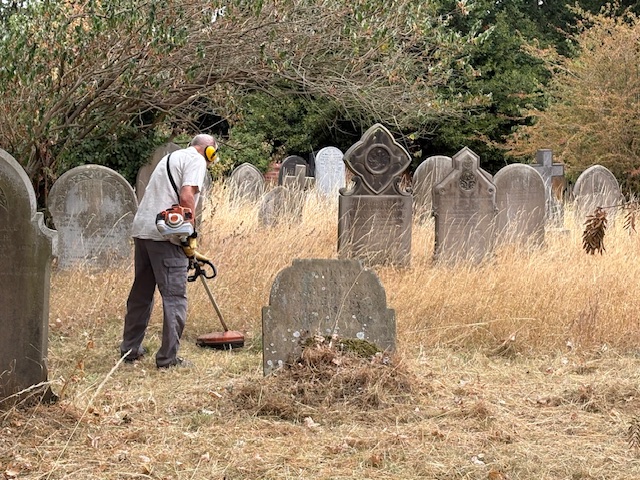
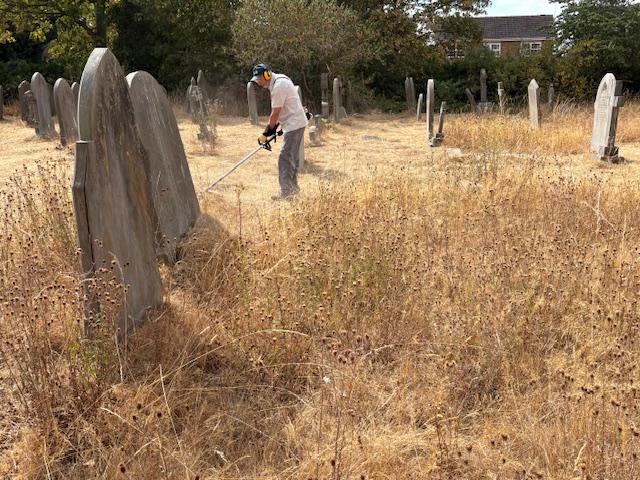
The work began on Saturday with strimming. On Monday came the raking and clearing, followed on Tuesday by the final tidying before the rain really set in. The main job was completed in three days by volunteers giving around 40 hours in total.
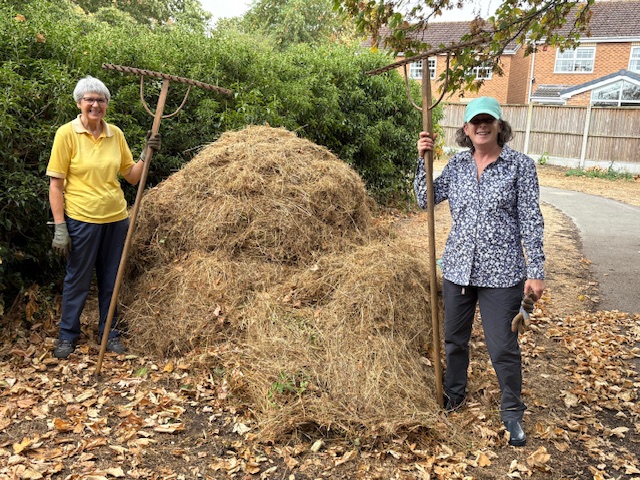
THREE DAYS. FORTY HOURS. ONE VERY LARGE HAYSTACK.
The dry conditions this year made the work considerably easier than in previous years. Even so, clearing a churchyard is no small task, particularly when working around graves, kerbs and areas that are difficult to reach.
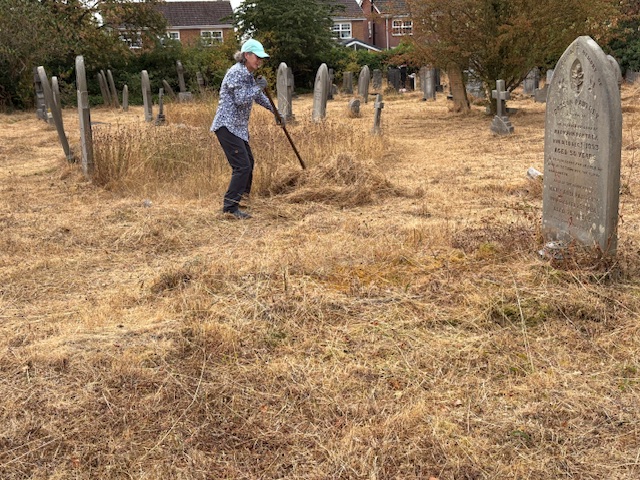
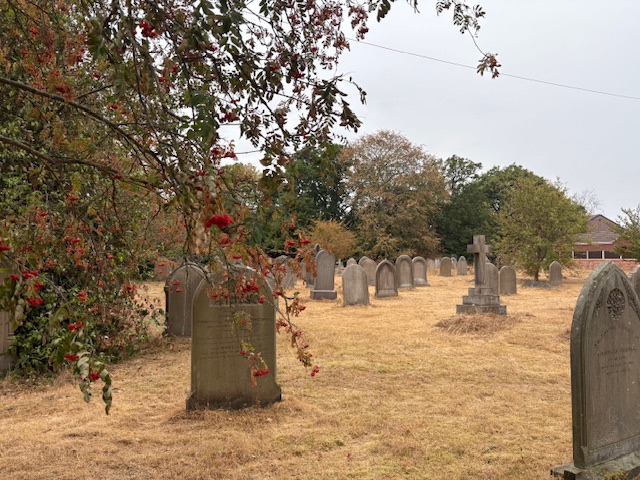
After initially filling the green bins with cut material, the remainder was gathered into one rather impressive final haystack. It will be collected by arrangement with the council.
LOOK CLOSELY…
The churchyard isn’t just somewhere to cut the grass. Look closely and there’s a whole miniature world going on.
A MINIATURE WORLD BENEATH OUR FEET
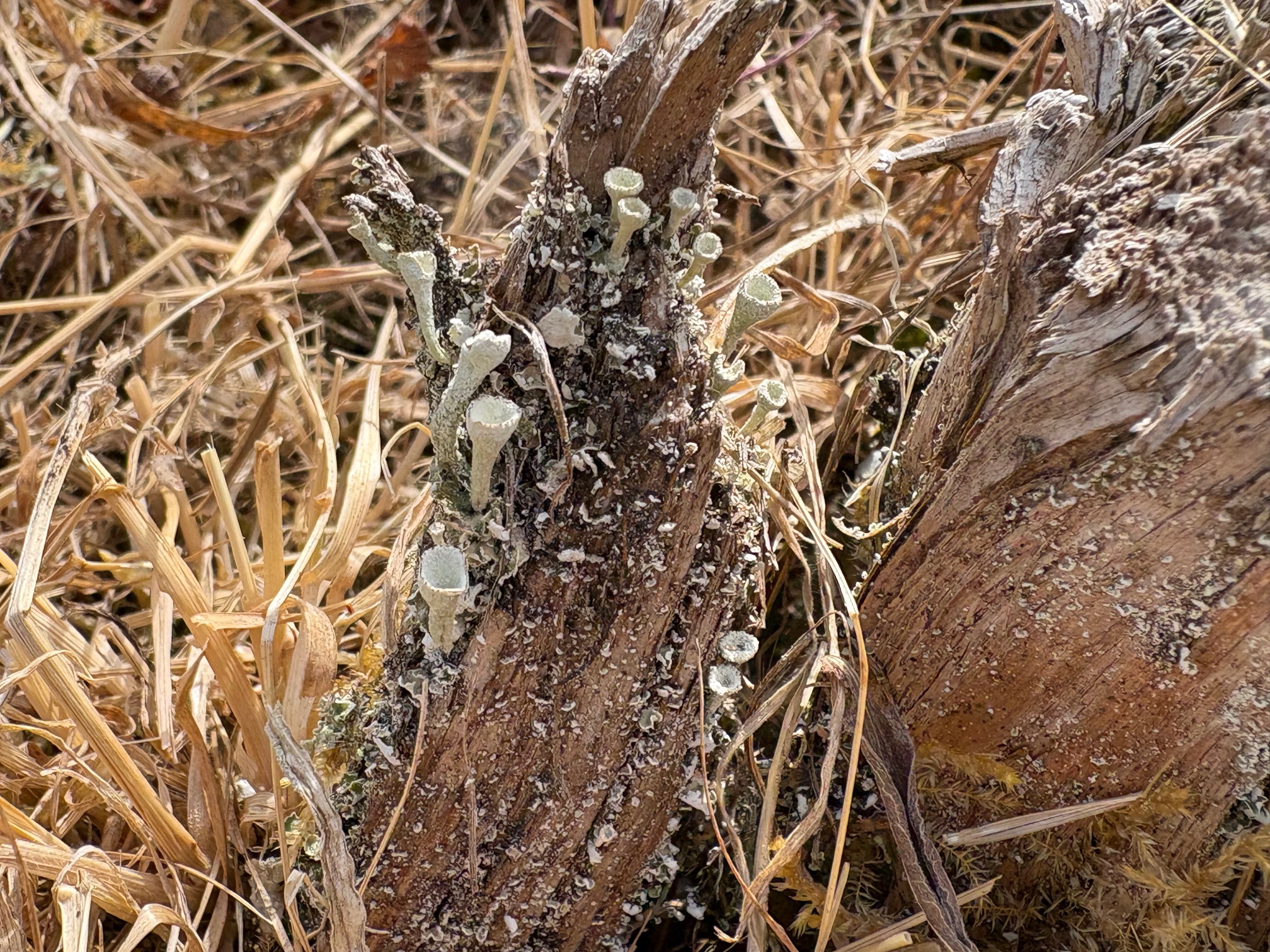
One of the discoveries was a small colony of pixie cup lichens growing on a tree stump in the summer meadow. Rather than being cleared away, the grass around them was carefully removed by hand using sheep shears, allowing this little patch to remain undisturbed.
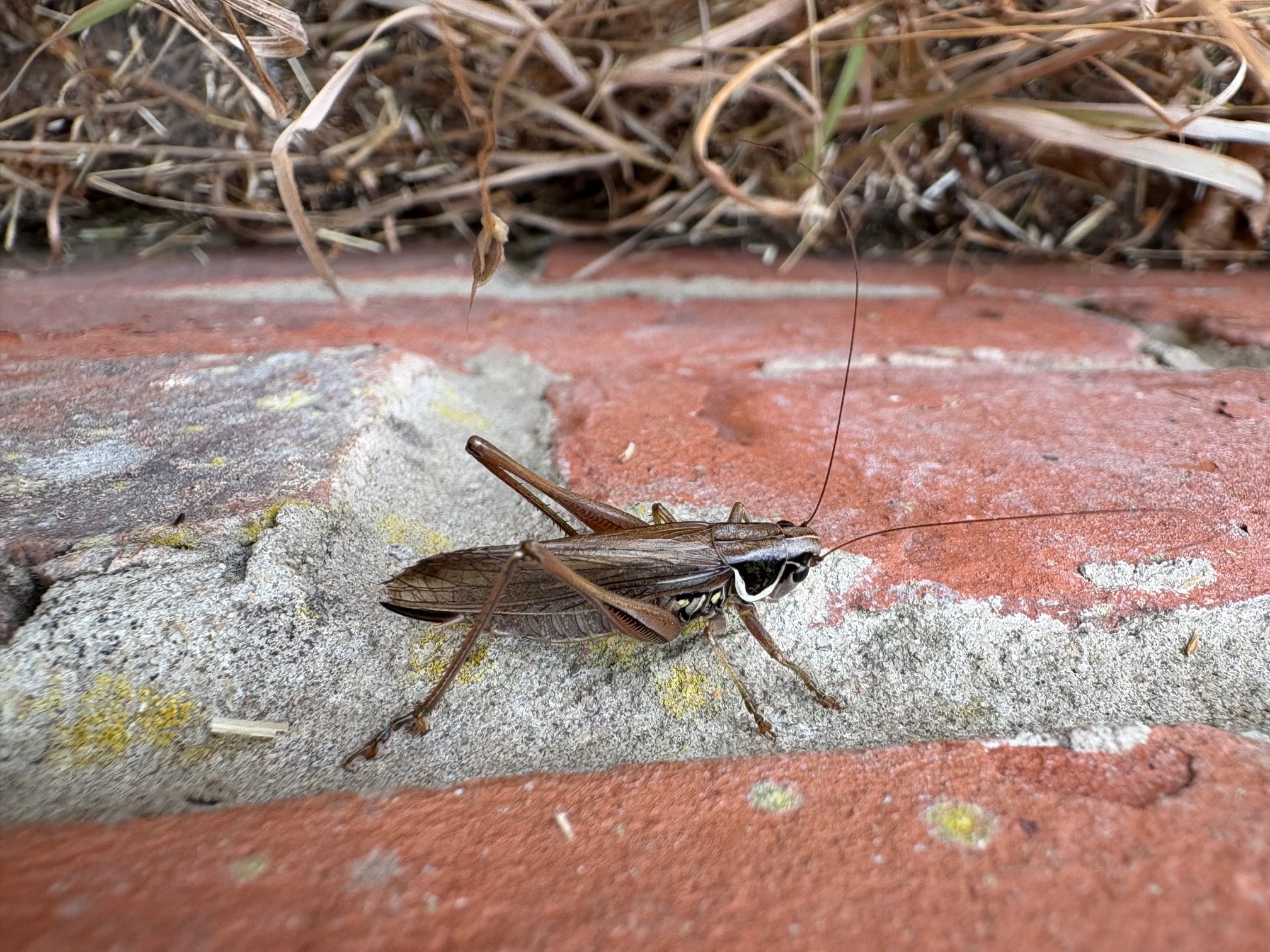
A NEW RECORD FOR THE CHURCHYARD
A particularly striking Roesel’s bush-cricket was found on the new wall. This is a new record for the churchyard. The wall faces south and gets plenty of warm sunshine, making it an attractive habitat for insects — and its exceptionally long antennae make it quite a character.
DAVID, GOLIATH AND A DOCK BUG
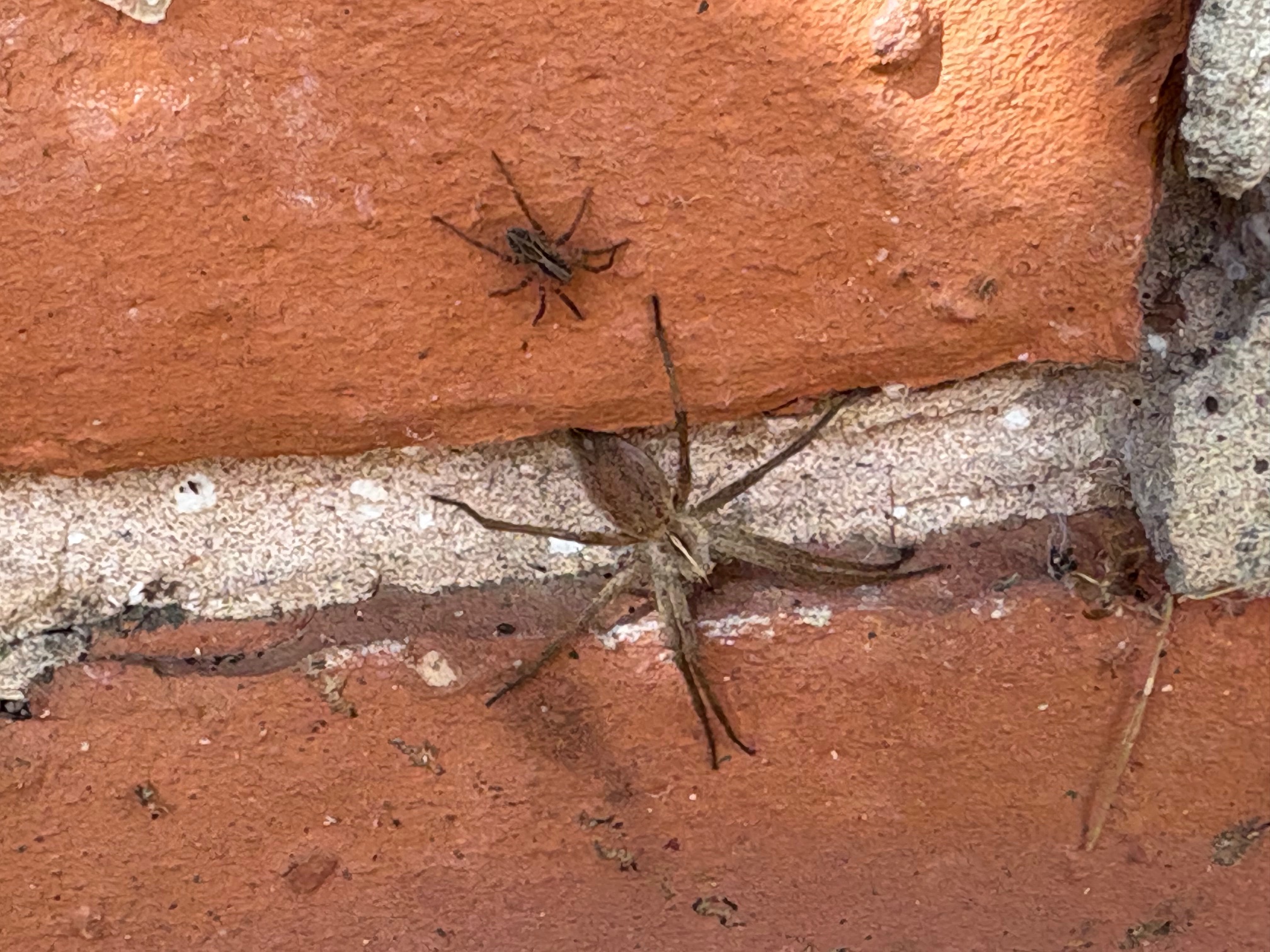
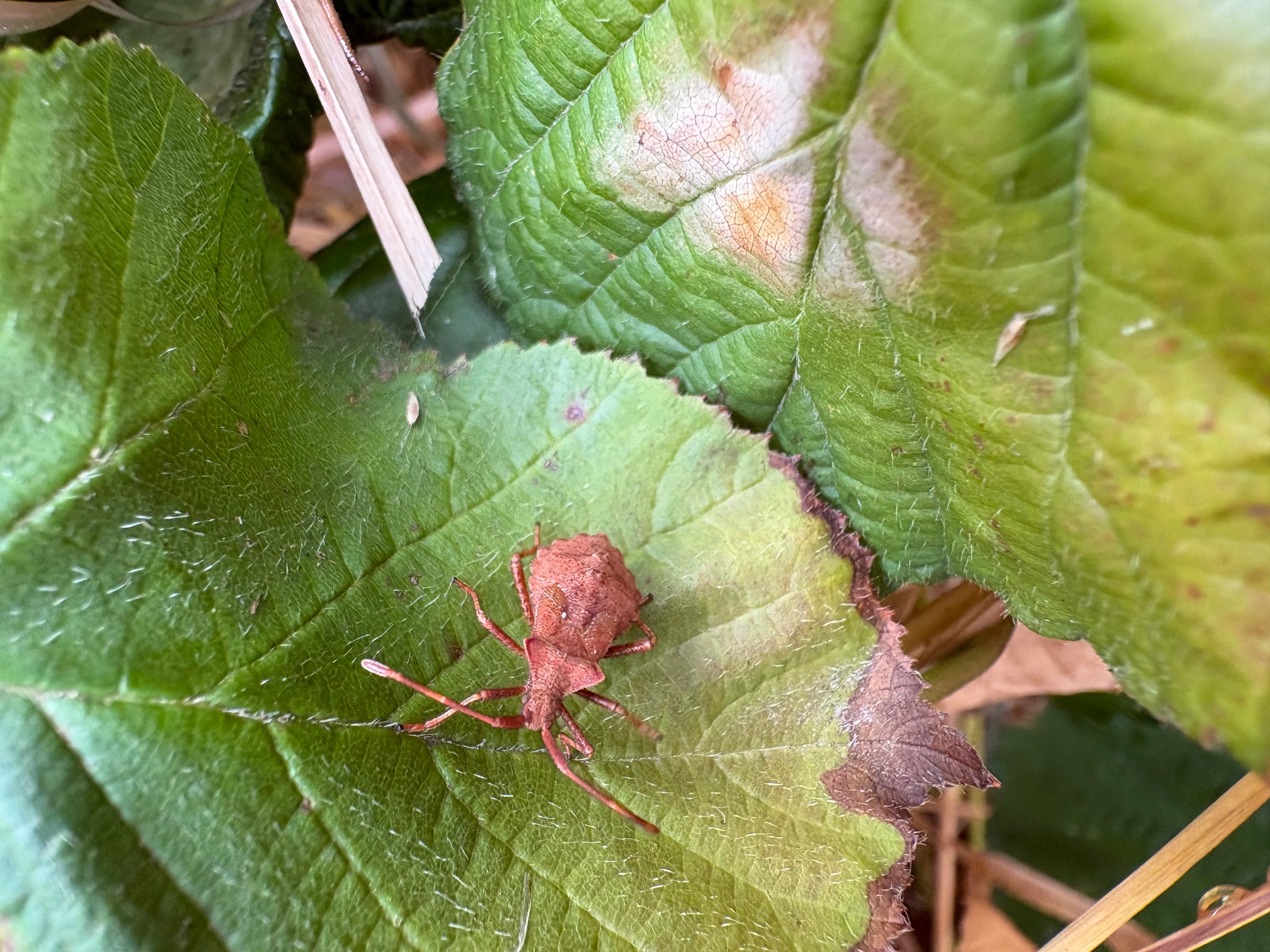
The new wall also provided a home for two spiders of dramatically different sizes, rather appropriately nicknamed “David and Goliath”. Elsewhere, a Dock Bug was found on a dock plant while seed heads were being removed to prevent the plant spreading further.
SLEEPING THROUGH THE SEASON
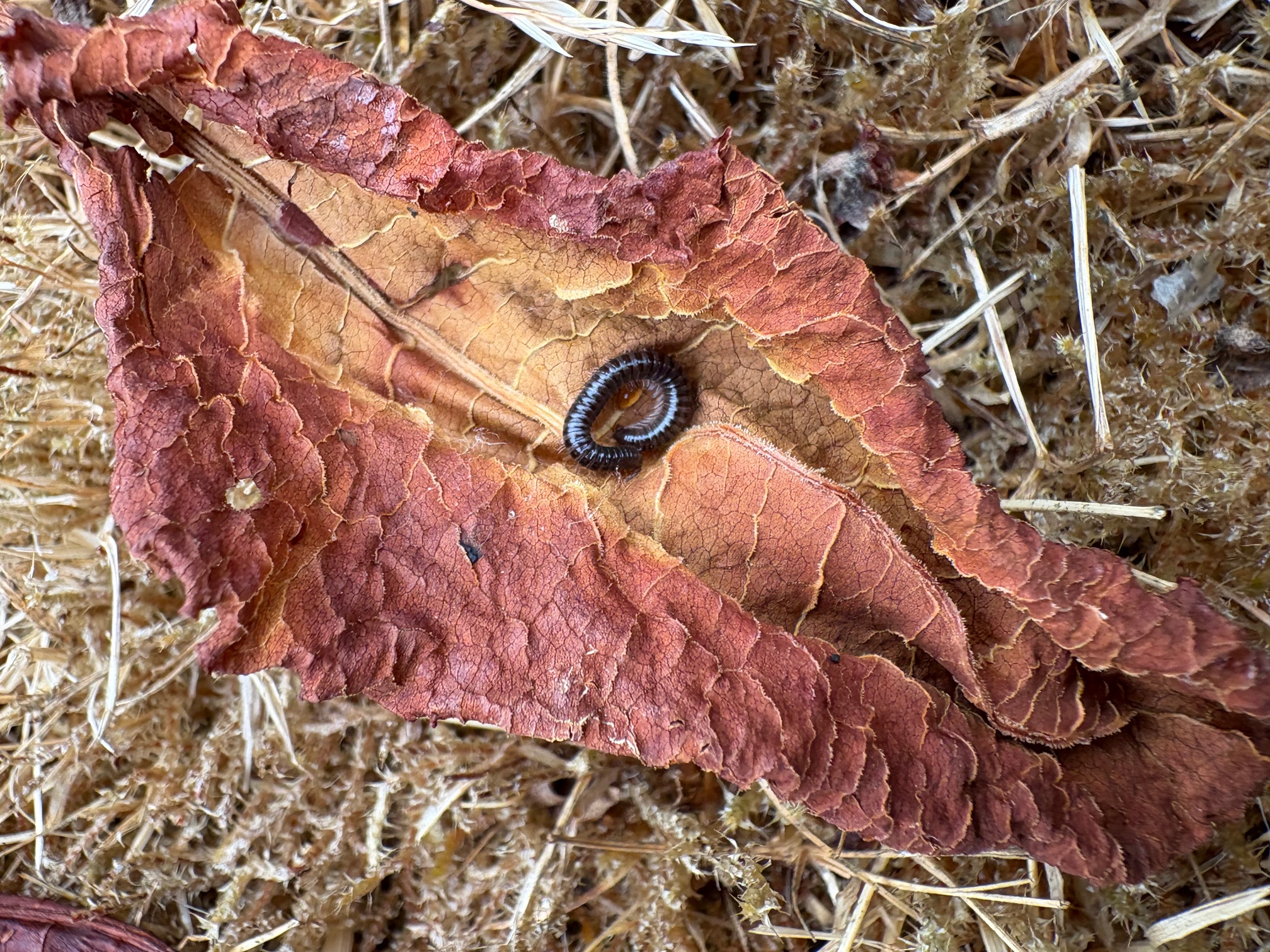
A Snake-legged Millipede was found curled up inside a fallen leaf. It had apparently settled down for an early hibernation. Rather than disturbing it any further, it was moved to a quieter spot where it could carry on with its sleep.
A CHURCHYARD ALIVE WITH LIFE
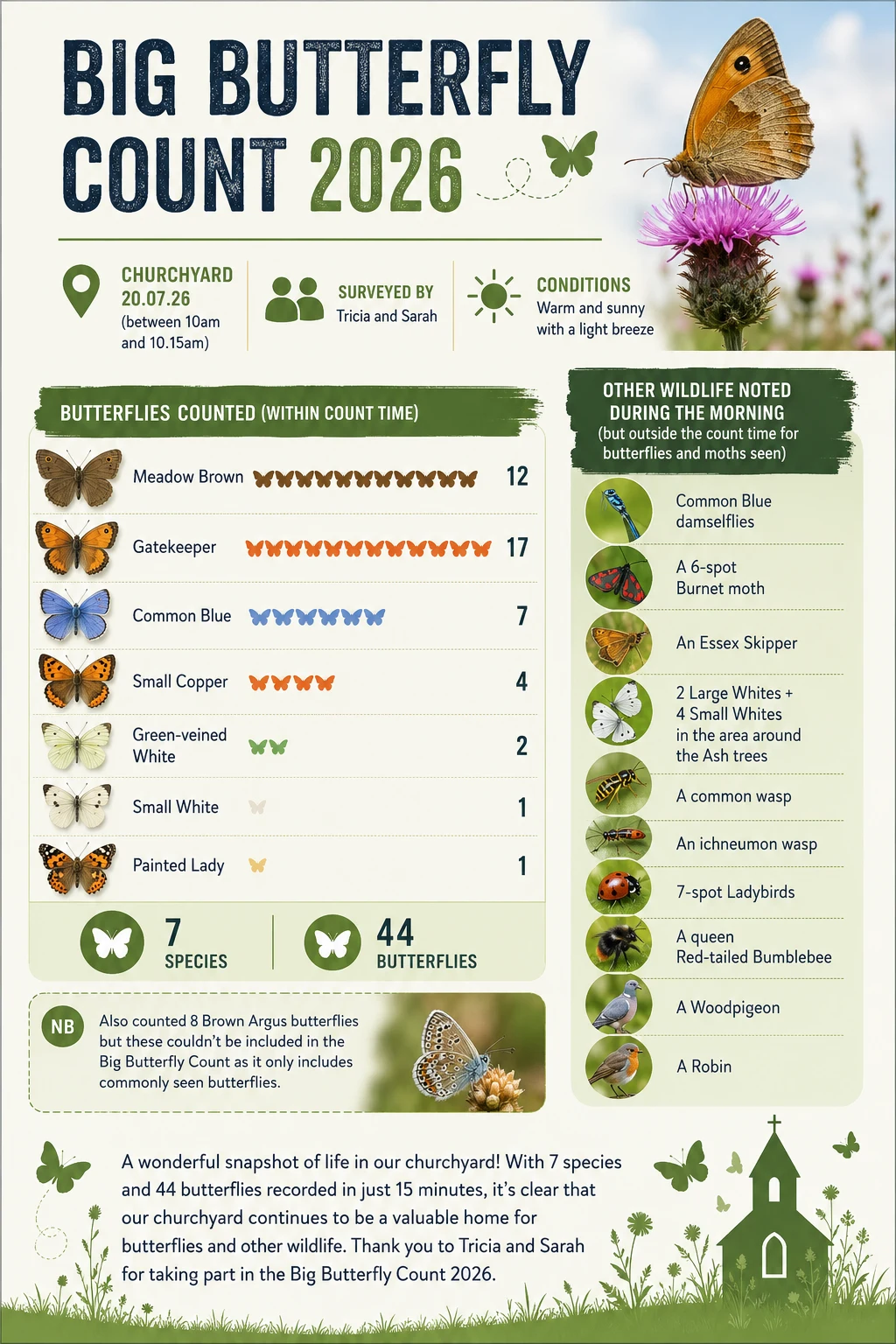
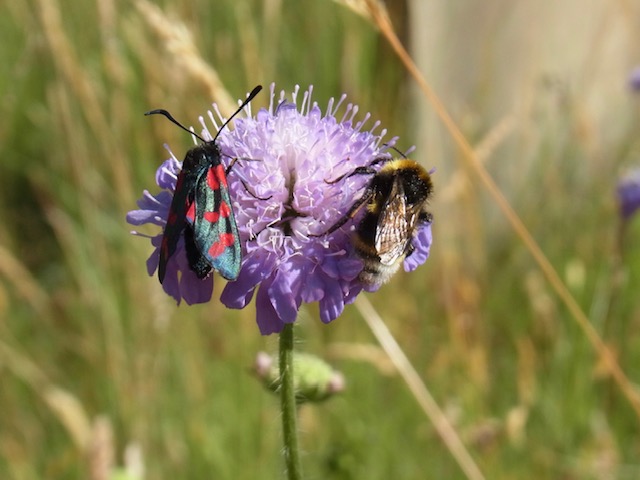
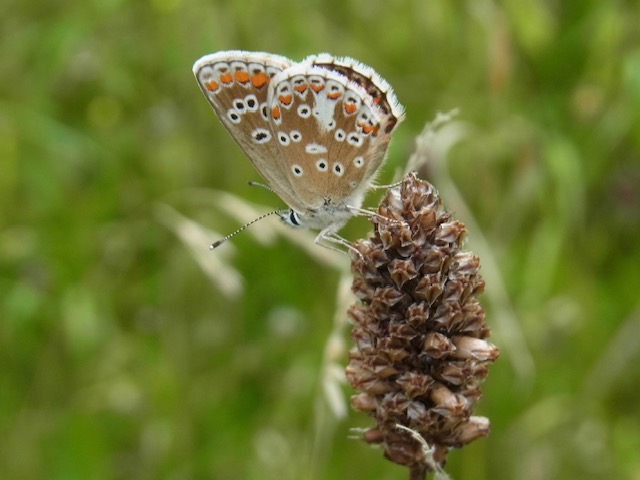
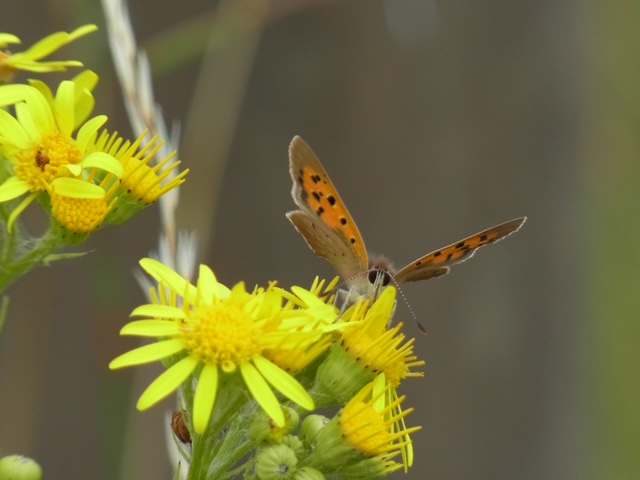
The work also disturbed plenty of grasshoppers and revealed butterflies among the vegetation. Together with the lichens, insects and other small creatures found during the work, they’re a reminder of the rich variety of life that can exist in a churchyard.
Although the main job is now done, there are still a few areas needing some careful attention, particularly around the difficult-to-reach kerbed graves in the south-west corner. The final mowing will also have to wait until the ground has dried out.
Looking after a churchyard is a balance: keeping it tidy, accessible and cared for while also recognising and protecting the wildlife that makes its home here.
“Even when we think we’re simply tidying the churchyard, there’s always something new to discover.”
A huge thank you to everyone who gave their time, energy and muscle to care for this special place — both for the people who visit it and for the wildlife that calls it home.